
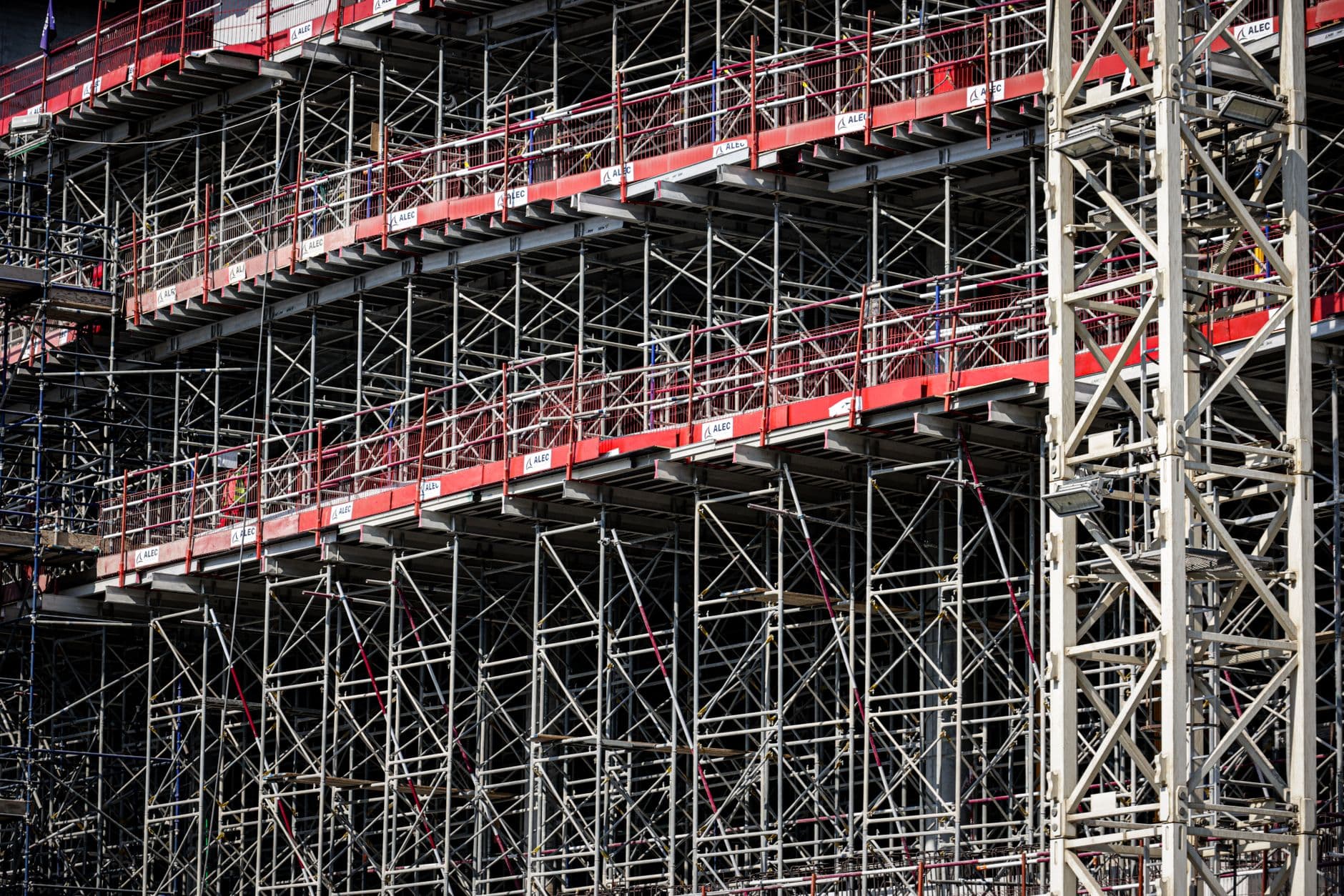
Scaffolding is one of the most common work platforms in construction — and one of the most consistently mismanaged. Every year, scaffold-related incidents kill dozens of workers and injure thousands more. OSHA cites scaffolding violations more than any other construction hazard.
Most of those incidents were preventable. The hazards were visible. The controls existed. They just weren't applied.
Why Scaffolding Is Consistently Dangerous
Scaffolding problems tend to cluster around three root causes: improper erection, lack of daily inspection, and inadequate fall protection. All three are addressable. All three are routinely skipped when schedule pressure builds.
The OSHA scaffolding standard (29 CFR 1926 Subpart L) is one of the most detailed in construction. That detail exists because the failure modes are well-documented. Planking that isn't properly secured. Guardrails removed to make a task easier and never replaced. Workers accessing a scaffold without training. A competent person who exists on paper but doesn't actually inspect anything.
When something fails on a scaffold, the results are severe. A fall from 10 feet is often fatal. There is no near-miss that teaches the lesson gently.
The Competent Person Requirement
Every scaffold erection, use, and dismantling must be under the supervision of a competent person — someone with the training, experience, and authority to identify scaffold hazards and correct them.
This is not a formality. OSHA's definition is specific: a competent person must have the knowledge to identify hazardous or dangerous conditions and have the authority to take prompt corrective action.
That last part matters. A foreman who identifies a problem but has to wait for approval before doing anything is not functioning as a competent person. The authority has to match the responsibility.
Competent person duties include:
- Directing and supervising scaffold erection and dismantling
- Conducting inspections before each work shift and after any event that could affect integrity (weather, equipment strikes, modification)
- Determining load-bearing capacity based on the scaffold type and condition
- Verifying that all workers who will use the scaffold have been trained
If your competent person is doing this in name only, the scaffold is uncontrolled regardless of what your program says.
Erection and Dismantling: Where Most Problems Start
Scaffold incidents don't usually happen in the middle of a normal workday. They happen because of something that went wrong during erection — a base plate that wasn't set properly, a cross brace that was skipped, a planking gap that was accepted as good enough.
Key erection requirements under 1926.451:
Foundations must be sound. Base plates and mudsills are not optional. Scaffolding erected on unstable fill, frozen ground, or surfaces that can shift under load will eventually fail.
Plumb, level, and square. Scaffold frames that are out of plumb transfer loads in ways the system wasn't designed for. This is how frames buckle.
Planking must be properly installed. Planks must overlap at least 12 inches over end supports, extend no more than 18 inches beyond the support, and be secured against displacement. Plank-to-plank gaps cannot exceed 1 inch — workers can catch a boot and fall.
Ties and bracing must match the erection sequence. As the scaffold goes up, ties to the structure keep it stable. They must be installed at the right intervals and cannot be removed until the dismantling sequence reaches that point.
Dismantling is as hazardous as erection — often more so, because workers are fatigued and the scaffold has been in use long enough for components to be mishandled, loosened, or modified. Dismantle under the same competent person oversight, in reverse sequence.
Daily Inspection: What It Actually Requires
A quick visual scan before climbing isn't an inspection. An inspection means walking the scaffold with the intent to find problems — not confirm that things look okay.
Before each shift, a competent person should check:
- Base plates and mudsills — settling, undermining from rain, or displacement
- Frames and components — bent or cracked sections, missing pins, improper substitutions
- Plank condition — cracks, splitting, warping, or damage from dropped materials
- Guardrail integrity — top rail, mid rail, and toeboard present and secure on all open sides and ends
- Access — ladders or stair towers properly placed and secured
- Overhead hazards — suspended loads, overhead power lines, or weather conditions that affect safe use
If the inspection finds a problem, the scaffold is taken out of service until corrected. Not until the end of the day. Not until after the crew finishes the current task. Out of service.
Document your inspections. Date, name, findings, and any corrective actions. OSHA will ask.
Fall Protection on Scaffolds
Workers on scaffolding 10 feet or higher require fall protection. The primary method is a fully planked scaffold with guardrails on all open sides and ends — a top rail at 38–45 inches, a mid rail at approximately the midpoint, and a toeboard to prevent materials from being kicked off the edge.
Personal fall arrest systems are required in specific situations:
- When the scaffold cannot be fully planked or guarded
- On two-point suspension (swing stage) scaffolds
- When working conditions require positioning near an unguarded edge
Fall arrest anchors on scaffolding must support at least 5,000 pounds per attached worker and be independent of the scaffold structure where required. Using the top guardrail as an anchor point is not acceptable.
Workers on scaffolding need hands-on training — not a toolbox talk, not a video. They need to physically demonstrate how to inspect and don a harness, identify anchor points, and understand what happens to their body in an arrested fall. That training must be documented.
Load Capacity: A Calculation, Not a Guess
Every scaffold has a rated load capacity, and every contractor is responsible for knowing it. Overloading is a common scaffold failure mode — and it is rarely obvious until the scaffold fails.
Scaffolding must be designed to carry its own weight plus four times the maximum intended load. Before work begins, the competent person must assess:
- The weight of workers and their tools
- The weight of materials stored on the platform
- Any concentrated loads from equipment
A scaffold used for light finish work has a different load profile than one used to stage masonry block. Treating them the same is a mistake. When in doubt, engage a qualified engineer.
Weather, Power Lines, and Changing Conditions
Scaffolding that was safe at the start of the shift can become hazardous as conditions change. Weather is the most common trigger.
High winds affect both worker stability on elevated platforms and the structural loading on the scaffold itself. OSHA requires that work be suspended when wind and weather conditions create a hazard — and that threshold is lower on suspension scaffolds and for workers at higher elevations. Know your limits before conditions are already bad.
Power lines are the other critical exposure. The minimum safe distance from energized overhead power lines is 10 feet for lines carrying up to 50kV, and greater distances for higher voltages. This clearance applies to the scaffold structure, not just the workers on it. If the scaffold can't be erected with adequate clearance, the lines must be de-energized or protected before erection begins. Coordination with the utility is not optional.
After any event that could affect scaffold integrity — high winds, vehicle impact, modifications, or heavy rain that undermines footings — the competent person must re-inspect before the scaffold is used again.
What OSHA Will Look For
Scaffold inspections are a high-priority item for construction compliance officers. When OSHA arrives on a site with scaffolding, they will look for:
- Competent person designation and evidence of inspections
- Fall protection on all elevated platforms 10 feet or higher
- Proper planking with no gaps exceeding 1 inch and no unsecured planks
- Guardrails on all open sides and ends
- Safe access — no workers climbing cross braces
- Training records for workers who use the scaffold
- Load capacity documentation for scaffolds supporting heavy materials or equipment
Scaffold violations fall under Subpart L. They are frequently cited as serious violations, and a single inspection can result in multiple citations across different requirements. Repeat violations carry penalties up to $165,514 per citation.
The Bottom Line
Scaffolding is not inherently dangerous. Scaffold incidents are the product of shortcuts — erection done without a competent person, inspections skipped under time pressure, guardrails removed and not replaced, workers untrained in what to look for.
The standard is detailed for a reason: every requirement maps to a failure mode someone documented with a fatality. Following it consistently is not difficult. It requires oversight, documentation, and the organizational culture to shut down a scaffold that isn't safe — even when the schedule says otherwise.
Greenberg Safety provides scaffold safety program development, competent person training, site inspections, and OSHA compliance support for construction teams across Texas and nationwide.
Schedule a consultation or call (512) 585-7070 to get your scaffold program in order before the next inspection — or before the next incident.
Related reading: Fall Prevention on Construction Sites · When to Hire a Construction Safety Consultant · OSHA Scaffolding standards (29 CFR 1926 Subpart L)