
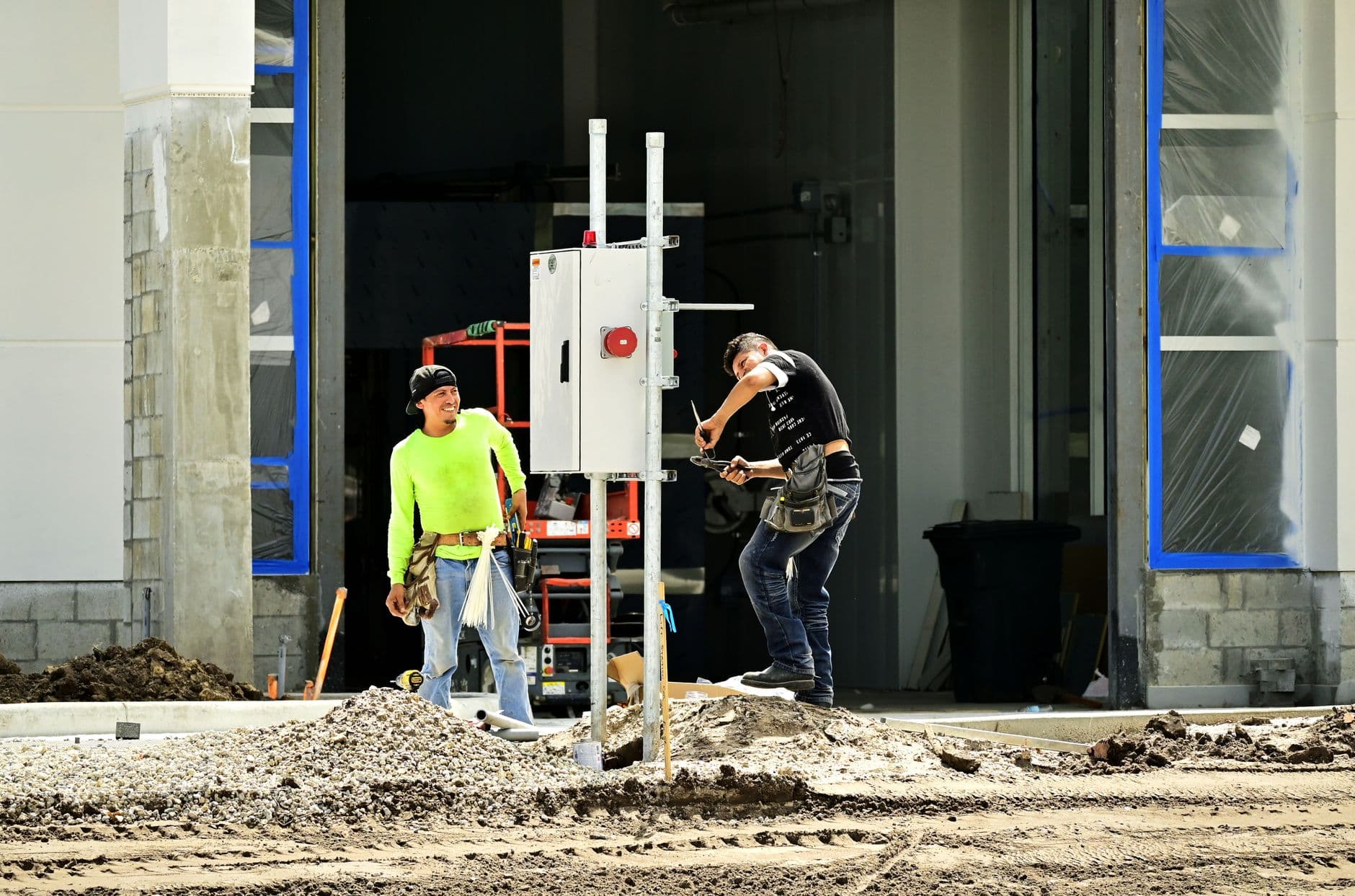
Texas is in the middle of a data center boom. From the Dallas-Fort Worth Metroplex to San Antonio and Austin, hyperscale facilities are going up faster than almost anywhere else in the country. That means thousands of construction workers are spending their days inside buildings that don't look like typical construction sites — and that's exactly where the danger hides.
Data center construction creates an electrical hazard profile that standard job site safety programs simply aren't designed for. If your crew is working on one of these projects and your safety plan looks the same as it does on a residential build or a parking garage, you are already behind.
The Data Center Electrical Environment Is Different
Most construction electrical work involves temporary power — GFCIs, extension cords, assured equipment grounding. It's controlled, relatively low-voltage, and well-understood.
Data center sites stack multiple high-risk conditions on top of each other:
- High-voltage systems commissioning during active construction. Electrical infrastructure — switchgear, transformers, UPS systems, bus ducts — gets energized in phases. In many projects, live electrical systems exist in one room while framing or mechanical work continues in the next.
- Concurrent operations. In colocation or phased builds, the existing tenant floors may be running at full capacity with live IT equipment while new construction happens in adjacent spaces.
- Dense electrical distribution at scale. These facilities move enormous amounts of power. A single data hall can contain 480V, 4,160V, and even higher-voltage systems within close proximity.
- Arc flash exposure. Arc flash is one of the most severe — and most underestimated — electrical hazards in construction. At data center voltages, an arc flash event can release enough energy to kill workers standing several feet away.
What OSHA Requires
OSHA's electrical standards for construction live under 29 CFR 1926 Subpart K. The most frequently cited requirements on complex electrical job sites include:
- Ground-fault protection (29 CFR 1926.404(b)(1)(i)) — GFCIs required on all 120V, single-phase, 15- and 20-amp receptacles. On a data center site, this applies to all temporary power as construction power runs alongside energized permanent systems.
- Path to ground (29 CFR 1926.404(f)) — All exposed metal parts of equipment must be grounded. This gets violated constantly when workers modify cords, remove ground prongs, or use adapters.
- Hazard recognition training (29 CFR 1926.21(b)(2)) — Employers must train workers to recognize and avoid unsafe electrical conditions. On a data center site, that training has to cover energized system awareness, not just cord safety.
- Lockout/Tagout — LOTO procedures must be site-specific and account for the phased energization schedule. A standard LOTO program written for a warehouse does not cut it when switchgear is being energized in stages.
The Hazards That Kill Workers on These Sites
OSHA has documented the five most common causes of electrical fatalities in construction:
1. Contact with overhead or in-wall power lines — Assumes not energized. It often is.
2. Lack of ground-fault protection — GFCIs skipped or bypassed on temporary circuits.
3. Missing or discontinuous path to ground — Modified tools, removed ground prongs, broken grounding paths.
4. Equipment misuse — Using ROMEX as extension cord, wrong breaker ratings, indoor equipment used outside.
5. Damaged extension and flexible cords — Worn insulation, missing strain relief, pulled-by-cord disconnects.
All five of these kill workers on conventional construction sites. On a data center site, they kill workers in proximity to systems carrying far more energy — which means the consequences are worse and the margin for error is smaller.
What a Site-Specific Electrical Safety Program Needs to Cover
A program that actually protects workers on a data center construction site needs to go beyond the basics:
Energization coordination. Every phase of electrical commissioning should be communicated to all trades working in or near the affected area. Workers who don't know a system is live cannot protect themselves from it.
Arc flash hazard analysis. Before any work is performed on or near energized equipment, an arc flash risk assessment should be completed. This determines required PPE and establishes safe approach boundaries.
Trade-specific electrical awareness training. Ironworkers, carpenters, and mechanical contractors are often working near energized data center systems without realizing it. They need awareness training even if they're not the electricians.
Daily pre-task electrical reviews. The energization status of a data center site changes constantly. What was de-energized yesterday may be live today. Pre-task planning has to account for that reality.
The Bottom Line
Texas is one of the most active data center construction markets in the world right now. The projects are large, the schedules are aggressive, and the electrical systems involved are more complex — and more dangerous — than most construction workers have encountered before.
If you're a general contractor, subcontractor, or owner's rep on a data center project and you're working from a standard safety plan, it's time to have a real conversation about what that site actually requires.
Greenberg Safety specializes in project-specific safety programs for data center and mission-critical construction. We've worked on these sites across North America, and we understand the hazard profile. Call us at (512) 585-7070 or schedule a consultation to talk through what your project needs.